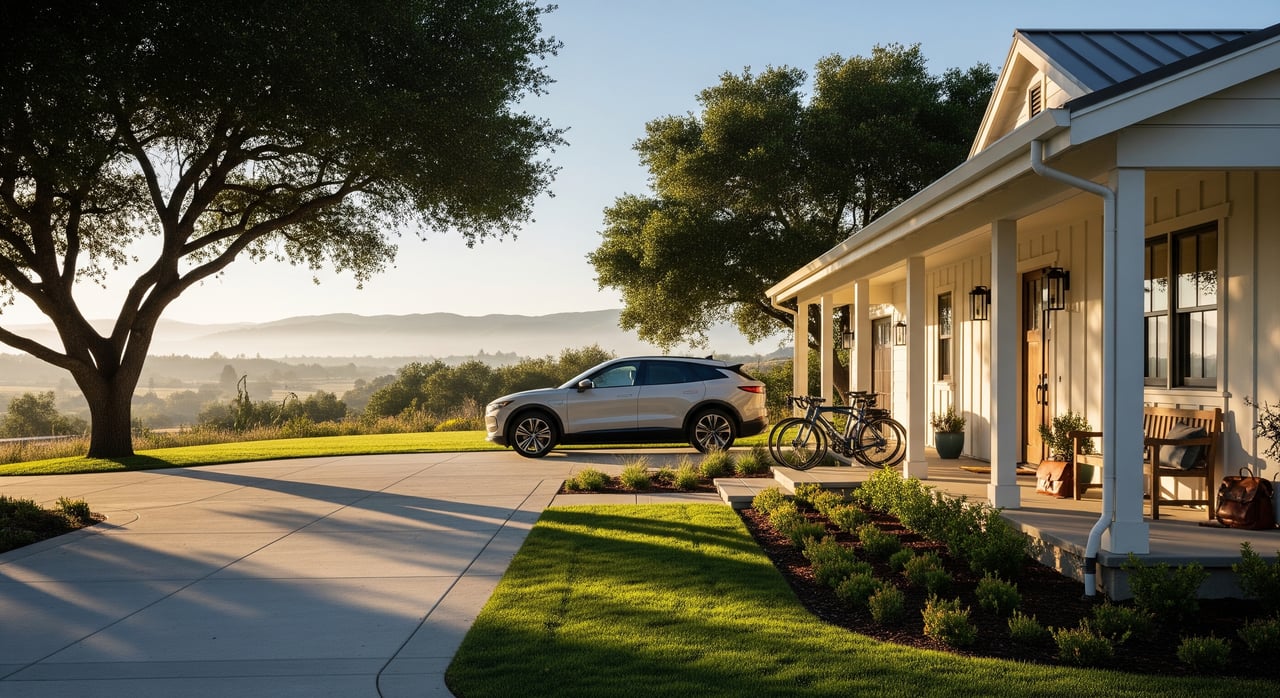
If your work week stretches across the Bay Area but your heart is set on space, parks, and a lively small-city feel, Pleasanton is worth a close look. You want strong schools, a friendly downtown, and a commute that does not drain your family’s time. This guide gives you a clear view of daily life in Pleasanton, with practical details on schools, commutes, parks, budgets, and neighborhoods. You will see what a typical week can look like and how to plan around tradeoffs. Let’s dive in.
Pleasanton snapshot for commuters
Pleasanton sits in southeastern Alameda County in the Tri-Valley, about 25 to 35 miles east of San Francisco. The city is suburban and low rise, with tree-lined streets and a historic Main Street that anchors daily life. You can run quick errands downtown, stop for coffee after school drop-off, and head to nearby open space or Livermore Valley wineries on weekends.
The housing stock skews toward single-family homes, with townhomes and condos in select pockets. Many buyers are move-up families who want more space and yard access. Pleasanton is generally more expensive than many East Bay cities and inventory for larger homes can be tight, so it helps to prepare early and move decisively when you find the right fit.
For official city services, parks, and event information, start with the City of Pleasanton.
Schools and family services
Public schools in PUSD
Most of the city is served by Pleasanton Unified School District. The district includes neighborhood elementary schools, middle schools, and two comprehensive high schools, Amador Valley High School and Foothill High School. Families often cite academics and programs as key reasons to choose Pleasanton. For current enrollment, boundaries, and programs, check the Pleasanton Unified School District. You can review state-reported data through the California Department of Education.
Tip: School boundaries can shift. Verify the assigned schools for a specific address on PUSD maps before you write an offer.
Childcare and after-school care
Like much of the Bay Area, demand for infant and toddler care is high. Expect to join waitlists and plan ahead, especially for popular preschools and daycare facilities near business parks. Many families blend center-based care with in-home options, nanny shares, or after-school programs through the city.
Planning steps:
- Begin outreach 6 to 9 months before you need a spot.
- Ask about backup care and part-time schedules if you commute on alternating days.
- Combine school-based programs with city recreation classes during busy seasons.
Enrichment and rec programs
Youth sports, music, arts, and Scouts are popular. The city runs seasonal camps and after-school activities through its community centers. Browse upcoming offerings on the City of Pleasanton site to plan around your family calendar.
Daily life and amenities
Downtown and shopping
Pleasanton’s Main Street is a walkable hub with restaurants, cafes, and local shops. Farmers’ markets and community events bring families out year-round. For bigger errands and national retailers, Stoneridge Shopping Center and nearby retail corridors are a short drive.
Parks and weekend fun
Outdoor time is easy to plan. Pleasanton Ridge offers miles of trails and hilltop views, while Shadow Cliffs brings lakeside paths and picnic areas. You can explore options through the East Bay Regional Park District. The Alameda County Fairgrounds hosts festivals, the county fair, and community events that make for easy weekend outings.
A weekday that works
Here is a common rhythm for a dual-income household:
- Morning: School drop-off, then a quick coffee downtown before catching BART at Dublin Pleasanton or heading south on I-680.
- Afternoon: Employer shuttle or BART back, pick up from after-school programs or sports practice.
- Evening: Homework, dinner on Main Street, and a short neighborhood walk.
The key is building a commute pattern that fits your family’s schedule. Station parking, school carpools, and flexible start times can make a big difference.
Commute options and tradeoffs
BART to San Francisco and East Bay
The Dublin Pleasanton BART station connects you to Oakland, San Francisco, and other East Bay destinations. Peak service is frequent. Parking can fill early on weekdays, so many families use drop-offs, carpools, or employer shuttles. Check schedules and parking updates directly with BART.
Travel time to San Francisco varies by time of day and transfer needs. Many commuters plan for a door-to-door window of about 45 to 70 minutes when traveling from Pleasanton-area stations to downtown SF. Your exact time will depend on your origin, transfer, and final stop.
ACE to Silicon Valley
If your office is in San Jose or along the Peninsula, the Altamont Corridor Express can be a comfortable option during traditional work hours. ACE runs weekday service between the Central Valley and San Jose, with Pleasanton among the served stops. Review current timetables and stations on the ACE site.
Driving I-580 and I-680
I-580 and I-680 are the main arteries for Tri-Valley commuters. Like most Bay Area corridors, they experience significant congestion during peak hours. Many Pleasanton residents drive to BART or ACE, then connect via rail to reduce both parking stress in the city and highway time.
Sample commute scenarios
- Pleasanton to San Francisco by BART: Drive, carpool, or get dropped at Dublin Pleasanton, then ride into SF. Plan for a door-to-door window of roughly 45 to 70 minutes depending on parking, transfers, and your final stop.
- Pleasanton to San Jose by ACE or I-680: ACE aligns with standard office hours and allows you to work or read on the train. If you drive, expect variable times that are sensitive to departure window and live traffic.
- Last-mile planning: Coordinate school drop-off windows, station parking, and pick-ups. Employer shuttles, carpools, and adjusted start times help you avoid the worst peak periods.
What’s next: Valley Link
A planned regional rail project known as Valley Link would connect the Tri-Valley with the San Joaquin Valley and provide new connectivity with BART. This project could reshape future commute patterns. For status updates and timelines, see the official Valley Link site.
Costs and budgeting
Pleasanton’s market often carries a premium compared with many East Bay communities. Families weigh that cost against larger lot sizes, parks, and school access. For homeowners, property taxes in California are tied to the purchase price at the time of sale, with annual increases limited under state rules. When you plan your move, build a realistic view of both housing and daily living expenses.
Monthly budget checklist
Use this simple checklist to model a Pleasanton life:
- Mortgage or rent and property taxes
- Utilities and internet
- Childcare or after-school programs
- Transportation, including gas, tolls, rail passes, and parking
- Groceries and dining out
- Youth sports, music, camps, and enrichment
- Health insurance and medical copays
- Savings for education, travel, and home maintenance
Ways to ease commute costs
- Talk to your employer about hybrid days to reduce transit and parking costs.
- Carpool to stations or use employer shuttles where available.
- Align after-school care with your latest commute arrival to avoid overtime fees.
Neighborhood snapshot
Pleasanton offers a range of neighborhoods that work well for commuter families:
- Downtown and nearby streets: Walkable access to Main Street and some schools, with a mix of older cottages and renovated homes.
- West and south Pleasanton: Often feature newer developments, parks, and larger lots. Always verify school boundaries.
- Vintage Hills, Mohr Springs, Del Prado, and more: Established areas with varied lot sizes and proximity to parks or transit corridors. Each micro-area feels a little different.
Before you home shop, test your specific commute at your typical departure time and confirm school boundaries on the Pleasanton Unified School District site.
How we help commuter families
Buying or selling as a commuter family takes planning. You need the right house, the right school alignment, and a commute that fits. Our approach pairs local market expertise with construction fluency so you can make confident decisions. On the sell side, targeted pre-sale improvements and premium staging can maximize your result. On the buy side, proactive sourcing and renovation insight help you compete for the home that fits your week.
If you are weighing Pleasanton against nearby East Bay cities, we can help you compare neighborhood options, test commutes, and map timelines that match school calendars.
Ready to explore Pleasanton?
When you are ready to see how Pleasanton fits your life, start with a practical plan. Connect with Sanjay Mitra to schedule a consultation and get a tailored strategy for your move.
FAQs
Is commuting from Pleasanton to San Francisco realistic daily?
- Yes. Many residents use the Dublin Pleasanton BART station for a predictable commute. Plan a door-to-door window that accounts for parking, transfers, and final destination, and check BART for current schedules.
What makes Pleasanton attractive for families compared with closer-in areas?
- Families value larger homes, abundant parks, and access to neighborhood schools, plus a lively downtown. The tradeoff is typically a longer commute and higher housing costs than some urban neighborhoods.
How reliable is ACE for San Jose commutes?
- ACE is designed for weekday commuter patterns and serves Pleasanton and San Jose among its stops. Review the latest timetables and station list on the ACE site to confirm alignment with your work hours.
What should parents know about Pleasanton schools and boundaries?
- Most of Pleasanton is in PUSD, which assigns schools by address. Boundaries can change, so verify school assignment and review state-reported data through Pleasanton Unified School District and the California Department of Education.
Which Pleasanton neighborhoods are convenient for BART access?
- Many residents drive or carpool to Dublin Pleasanton BART. Neighborhood choice depends on your school goals, budget, and preferred drive time to the station. Test the route from each home you consider during your usual commute window.
How early should I plan for BART parking at Dublin Pleasanton?
- Parking can fill early on weekdays. Families often use drop-offs, carpools, or employer shuttles to reduce parking stress. Check BART for station-specific parking updates.
What monthly costs should a Pleasanton commuter family budget?
- Plan for housing, property taxes, utilities, childcare or after-school care, transportation costs such as gas, tolls, rail passes, and parking, groceries, activities, health expenses, and savings for education and home upkeep.